Apertura Madrid Galleries Weekend is explicit in its title. It presents an opportunity for art lovers and collectors alike to visit the leading and fringe galleries that are usually concentrated in specific neighbourhoods in Madrid, to see their exhibitions in a more open, flexible conditions. It often entails direct presentations from the curators or owners, and occasionally the artists themselves. I see it as a major injection of cultural insulin after the summer slump, and the vivid, sometimes frantic preparation just before the openings is justly rewarded by the much larger attendance over this elongated weekend.
My chosen location on Saturday, 13 September was to concentrate on galleries in the central area, which encamps Cortes, Justicia, Chueca and parts of Gran Vía. The itinerary I used was provided by the excellent app, Arte Madrid, which is definitely worth downloading and consulting on a regular basis.
I’ll only include a few highlights, rather than an exhaustive review.
Ehrhardt Florez Gallery
Artist: Luis Claramunt
Gallery Director: Ana Area
The gallery is tucked away, inconspicuously at the backend of an open courtyard on C/ San Lorenzo 11, with three other galleries as its direct neighbours. Ehrhardt Florez usually concentrates on singular artists with large, intense pieces that delve into social/ecological paradoxes that directly relate the artists living experiences.
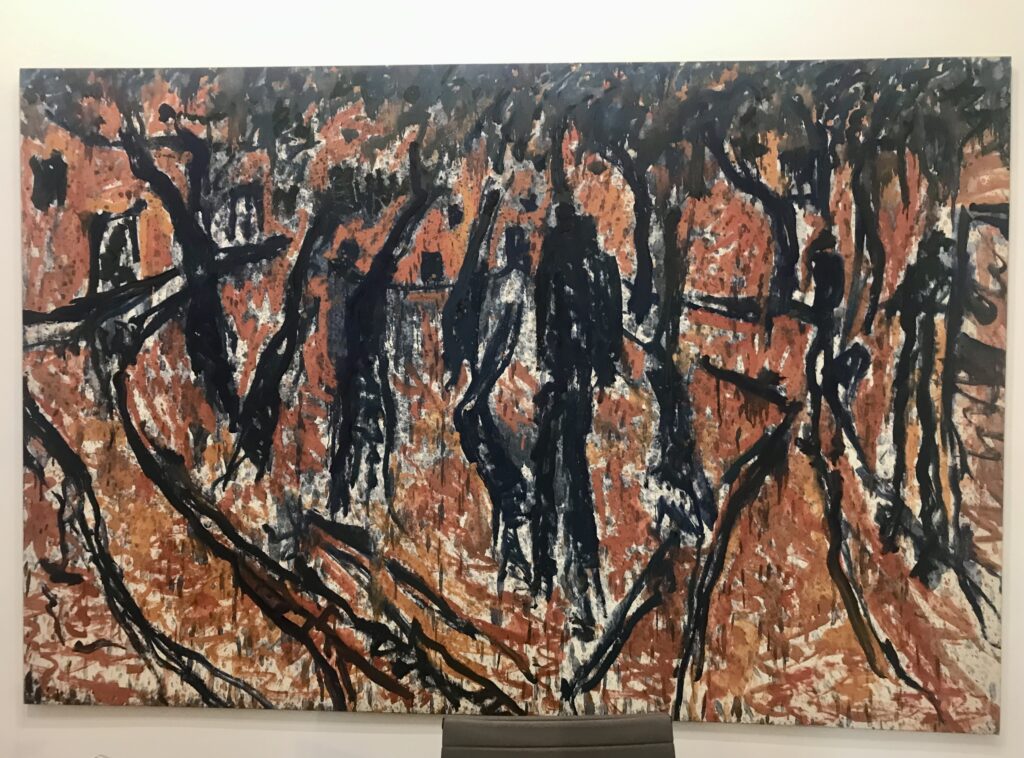
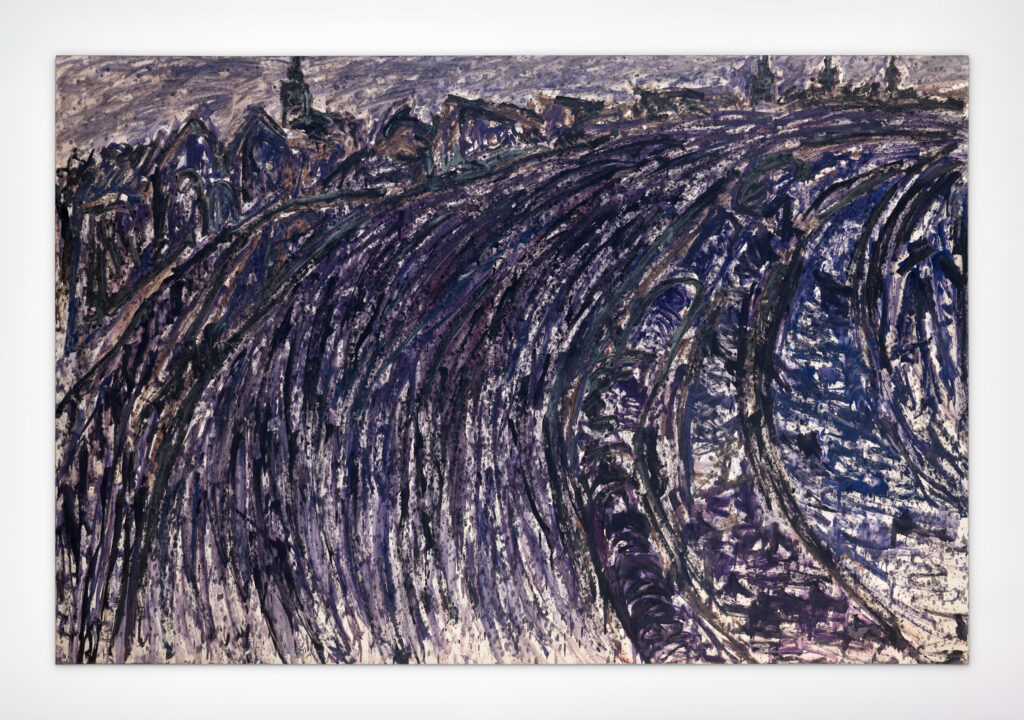
This exhibition focused on Luis Claramunt, (b. Barcelona 1952-d. Zarautz, 2000), who, in his relatively short, but highly productive life, has been unashamedly been relaunched into the public domain, after a prolonged absence. He was a major personality of the 1980s-90s Spanish art scene and lived an itinerant existence, preferring to roam where his art lured him to create. A type of endless journey rather than resettlement where his art evolved with each new destination.
A nomad at heart, purposefully adopting a gypsy lifestyle in both spirit and location. First Barcelona, his native city and then Seville and Morocco. It is the Seville years (1985-1989), which the gallery has acquired and celebrates in three, separate hangings. It was here that he grappled strenuously to overcome personal influences which would dictate the creative process, and rely, instead on serendipity, at least in the initial stages, to let a mark, or patch of colour suggest where the painting should go. Upon this base, an atmosphere built from lived experiences of the landscapes or parks would form, eradicating details in favour of an immersive feeling, where viewers could likewise by consumed by the liner, abrasive textures or almost monochrome panoramas which throbbed or absorbed their subtle presence.
Ana Area, a member of the curatorial team and director, commented that some visitors could not see their ideal of Seville in these paintings. However, I also lived in Seville, and found its light unflinching and blazingly eradicates details, leaving a harsh, cyanotype aftermath. She went on to say Claramunt merged himself in this living landscape of people and structures, where the fusion makes separation of individuality or recognizable forms futile. In fact, much of his work functions on two levels simultaneously; sprawling landscapes are tilted towards the surface, leading to a sense of “falling” into the painting. Textures and imagery defy pictorial devices and instead, present a united whole that is both subject matter and an objectified unit simultaneously. Finally, like some of his influences, but especially Van Gogh, there is a sense of isolation, a melancholy of a wonderer who doesn’t quite fit in, and who’s eventual departure is inevitable.
“